


When Should You Replace Brakes on a Chevy Truck or SUV?
 Your brakes are the most important safety system on your vehicle, yet they’re also one of the most commonly neglected. For Chevy truck and SUV owners in the Bossier City and Shreveport area, knowing the right Chevy brake replacement timing is about protecting yourself and everyone else on the road.
Whether you’re hauling equipment across Northwest Louisiana or sitting in Shreveport-Bossier City traffic, your brakes are working hard. Understanding when they need attention can save you from costly repairs and potentially far worse. Schedule a brake inspection with our team if you’re unsure where your brakes stand.
Brake Warning Signs Every Chevy Owner in Bossier City and Shreveport Should Know
Knowing how to tell if brakes need to be replaced starts with listening, paying attention to how the pedal feels, and watching your dashboard. Catching these signs early makes a real difference. Watch and listen for:
- Squealing or squeaking when braking. Usually the wear indicator built into your Chevy brake pads doing its job, warning you before damage becomes serious.
- Grinding or metal-on-metal sound. A sign the pads are likely worn through completely, and your rotors may already be getting scored.
- A soft or spongy brake pedal. Often points to a problem with brake fluid or internal brake components.
- Pulling to one side while braking. Can indicate uneven pad wear or a stuck caliper.
- An illuminated brake warning light. Your vehicle’s direct signal that something needs attention.
Because several of these symptoms can overlap with tire-related issues, a thorough inspection is always the most reliable path to an accurate diagnosis.
How Louisiana Roads and Driving Habits Accelerate Chevy Brake Wear
Louisiana’s roads put consistent stress on your braking system. Rough surfaces, uneven pavement, and seasonal potholes combined with the state’s heat and humidity push wear on Chevy truck brake pads and rotors faster than drivers in more temperate climates typically experience.
Towing and Hauling: The Fastest Path to Early Brake Wear
If you use your Chevy Silverado to tow a trailer or haul heavy payloads regularly, your brake pads are aging faster than your odometer suggests. The added weight dramatically increases stopping distances and forces your brakes to absorb far more kinetic energy per stop. This leads to overheating, accelerated pad loss, and in serious cases, premature rotor damage that turns a straightforward pad replacement into a full rotor replacement job.
Truck owners who tow frequently should treat brake inspection as part of their towing checklist. If you’re pulling a boat toward Toledo Bend or hauling equipment across the Ark-La-Tex region regularly, annual brake inspections are a smart minimum.
Daily Commuting Through Shreveport-Bossier City Traffic
Stop-and-go commuting through the Shreveport-Bossier City metro puts a different kind of strain on your brakes than highway driving. The repeated light-to-moderate braking involved in urban traffic might not feel aggressive, but the frequency adds up.
Over thousands of miles of city driving, those small brake applications accumulate into real wear. If your daily commute involves congestion on I-20, Louisiana Avenue, or Barksdale Boulevard, anticipate more frequent brake maintenance than general mileage estimates suggest.
How Often Should You Replace Brakes on a Chevy Truck or SUV?
Brake replacement has no single fixed mileage interval. Wear varies too much based on driving habits, vehicle weight, and conditions. As a practical guideline, plan on a brake inspection roughly every 10,000 miles or at least once a year for lower-mileage drivers.
Brake pad life ranges widely. In severe use involving heavy stop-and-go traffic, towing, or frequent hard stops, brake pads can wear out in as little as 20,000 to 25,000 miles. Under average conditions, they commonly last 40,000 to 60,000 miles. Rotors generally last longer but are not immune to damage, especially on trucks and SUVs used for demanding applications.
Rather than relying on mileage alone, combine mileage awareness with regular physical inspections. Routine visits for oil changes and tire rotations are natural checkpoints for brake wear, which is one reason staying with a single trusted shop pays off. Our certified Chevrolet brake service team checks brake condition as part of every multi-point inspection, so wear doesn’t sneak up on you between dedicated service appointments.
Book a brake inspection any time you’re unsure, or simply fold it into your next scheduled visit.
Worn Brake Pads vs. Damaged Rotors: Knowing the Difference Matters
Each brake problem has its own solution. The table below outlines common warning signs, their likely causes, and what service is typically recommended.
| Warning Sign | Likely Issue | Common Service Recommendation |
| High-pitched squealing | Pad wear indicator or thin pads | Inspect pads; replace if near limit |
| Grinding noise | Pads worn through; possible metal contact | Inspect pads and rotors immediately; stop driving if severe |
| Steering wheel or pedal vibration | Rotor warping or uneven wear | Inspect rotors; resurface or replace |
| Longer stopping distance | Reduced pad material or system wear | Brake inspection; likely pad replacement |
| Brake warning light | Sensor-triggered pad wear alert | Inspect sensors, pads, and related components |
| Shiny or glazed pad surface | Overheating or caliper issue | Full brake inspection and component check |
Some symptoms are urgent and require immediate attention: metal-on-metal grinding, a brake warning light, or the vehicle pulling hard during braking all warrant stopping driving or scheduling service right away. Others, like early squealing or slight pad thinning noticed during a routine visit, can often be monitored and addressed at the next scheduled appointment. Getting an accurate read from a trained technician beats guessing every time.
Chevy Truck vs. SUV Brake Wear: Why One Size Does Not Fit All
Brake wear patterns on a Silverado 1500 or Silverado HD look quite different from those on a Tahoe, Suburban, Traverse, or Equinox. Trucks used for work or towing place heavier and more concentrated demands on the braking system. Their greater curb weight and payload capacity mean the brakes are managing more mass on every stop, so brake pads on a work-used Silverado HD may wear significantly faster than brake pads on a family-driven Traverse covering similar annual mileage.
SUVs used primarily for family transportation tend to experience more even, predictable brake wear, though frequent highway driving versus urban commuting still shifts the timing. Rear brake wear can also differ between models depending on brake bias settings. Understanding your specific model’s wear patterns is one reason Chevrolet brake service is best handled by technicians familiar with the full Chevy lineup.
Brake Fluid and Preventative Inspections: The Services Most Drivers Skip
Most drivers know to get an oil change. Far fewer think about brake fluid until something goes wrong.
Brake Fluid Inspections and Why They Matter in Louisiana Heat
Brake fluid is hygroscopic, meaning it naturally absorbs moisture from the air over time. In Louisiana’s humid climate and high summer temperatures, this process happens faster than in most parts of the country. As moisture content rises, the fluid’s boiling point drops, reducing braking effectiveness under hard use. Low fluid level can also signal worn brake pads pushing the caliper pistons further out, or a leak somewhere in the system. Either way, it deserves attention.
Regular brake fluid checks should be part of your standard service routine. A technician can test the fluid’s condition and advise whether a flush is warranted before it becomes a performance concern.
Seasonal Brake Maintenance Considerations for Northwest Louisiana
Building brake maintenance into your regular routine rather than waiting for symptoms generally keeps repair costs lower and keeps you safer through every season. To keep brake repair costs down and stay ahead of wear, build these habits into your routine:
- Fold a brake check into every oil change and tire rotation. These visits are natural checkpoints, so wear gets caught before it becomes a safety or cost problem.
- Schedule annual inspections at minimum, and more often if you tow, haul, or commute heavily through Shreveport-Bossier City traffic.
- Don’t ignore early symptoms. A faint squeal or slight vibration addressed now is almost always cheaper than the rotor or caliper repair it turns into later.
- Treat brake inspection as part of your towing checklist if you regularly pull a boat toward Toledo Bend or move equipment across the Ark-La-Tex region.
- Ask about brake fluid condition, since Louisiana’s heat and humidity degrade it faster than in milder climates, and a flush is far cheaper than the damage old fluid allows.
- Time inspections for spring or early fall to catch wear or rotor corrosion before driving conditions get more demanding.
Schedule Your Chevy Brake Inspection at Red River Chevrolet
When brakes need to be replaced, a trained technician who has physically measured your specific vehicle is the only one who can tell you with any accuracy. Online mileage estimates provide useful context, but they cannot measure the thickness of your brake pads or confirm whether your rotors are within spec.
Red River Chevrolet has been serving drivers across Northwest Louisiana since 1931. Our master Chevrolet service technicians perform brake inspections and replacements using OEM parts built for your specific Chevy truck or SUV. As a Business Elite dealership, we’re held to high service standards, and our approach has always been straightforward and low-pressure.
Schedule your brake inspection online or call our service department at (318) 549-7500, Monday through Friday from 7:30 AM to 5:30 PM. For Chevy owners in Bossier City and Shreveport, we’re the team that knows your vehicle best.
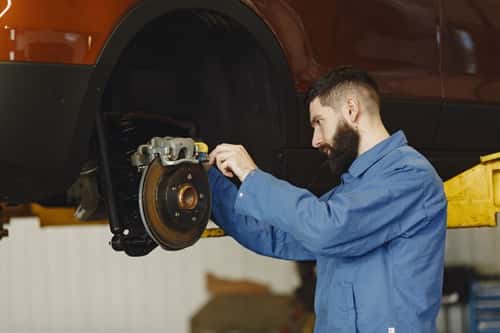
Photo of Mechanic in blue uniform performing brake repair on car in modern garage. by Gustavo Fring is licensed with Pexels License.
0 comment(s) so far on When Should You Replace Brakes on a Chevy Truck or SUV?